To observe your putting more clearly, practice start direction and distance control in separate blocks. Keep the setup, target and surface comparable, and record the ball's result before trying to explain the cause of a miss.
Why separate the two observations?
A ball can start in the intended direction and finish short. It can also reach the intended distance but pass to the side of the target. Recording only whether the putt went in combines these outcomes and provides little context for the next session.
This routine organizes observations; it does not automatically diagnose technique. A lateral miss alone does not measure putter face angle, club path, ball spin or the player's biomechanics.
Set up a session you can compare
- Choose an approximately flat practice surface and a clearly visible target.
- Mark a starting position you can repeat.
- Use the same ball and keep the target in place throughout the block.
- Choose a small number of attempts you can record attentively.
- Note the conditions and your intention before starting.
If you change distance, target or position, begin a new block. This avoids combining different situations into one impression of consistency.
Block 1: observe the starting direction
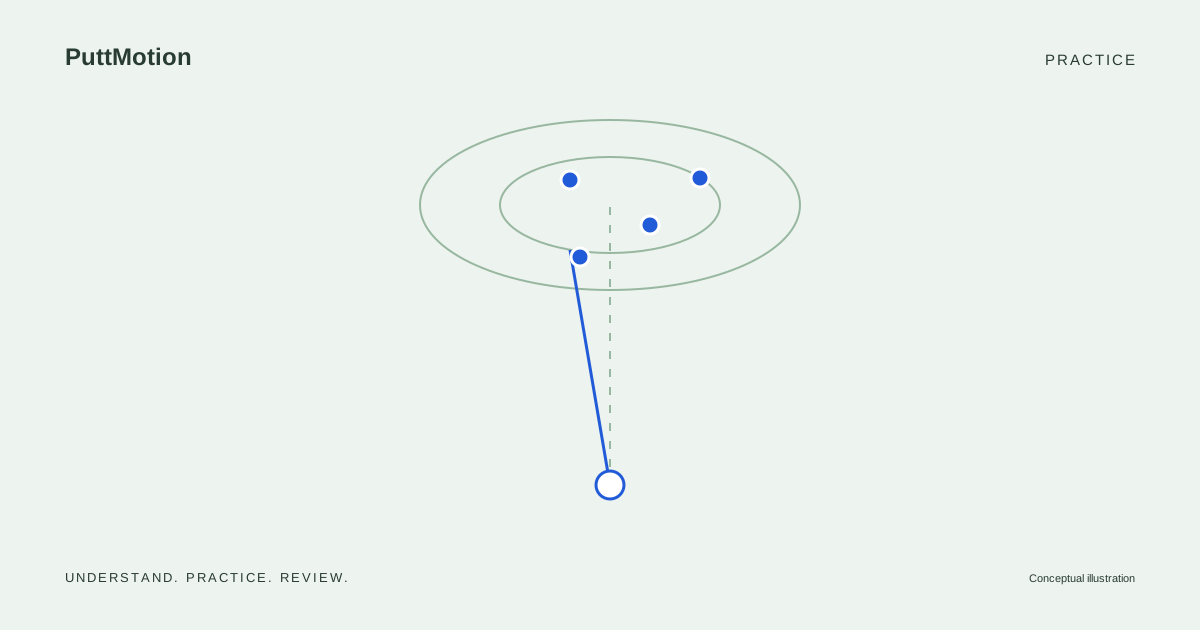
Use your chosen target as a reference and observe how the ball starts. Keep a simple record: left, close to the intended direction or right. If the observation was uncertain, mark it uncertain rather than inventing a measurement.
Do not turn that classification into an automatic explanation of the club's movement. The observed direction is the available result; finding the cause requires a different observation or assessment.
Block 2: observe where the ball stops
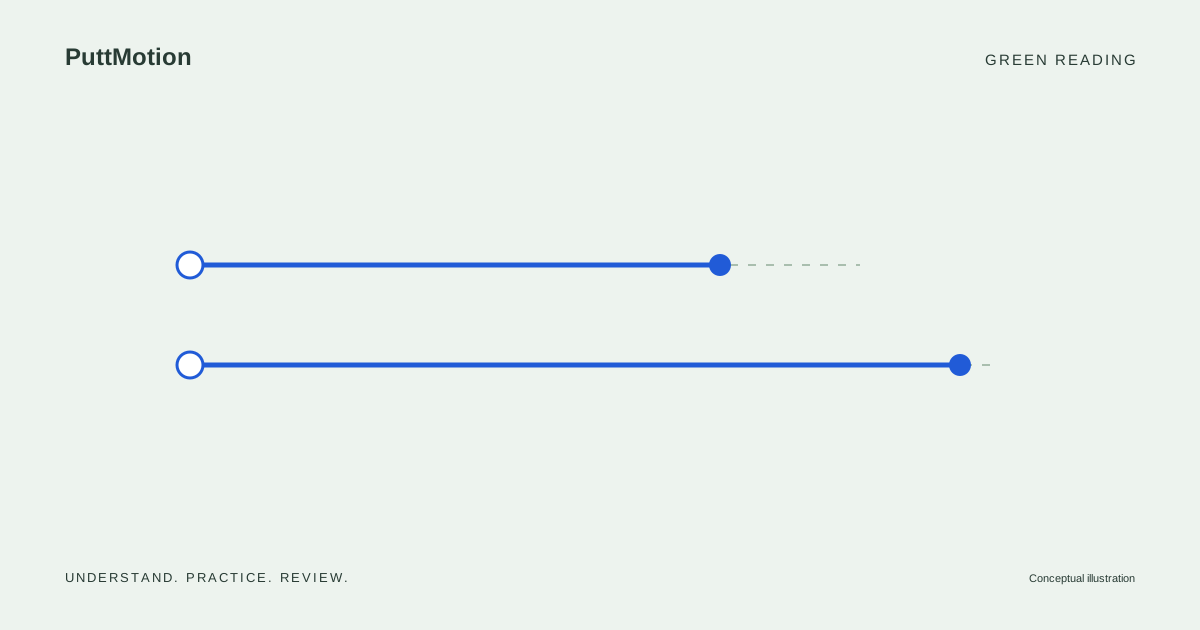
In a new block, focus the record on the stopping position: short, near the target or long. Also note any visible lateral deviation. If you have a reliable measurement, record it with its unit; if you only have a visual observation, keep that distinction.
A pattern of stopping positions is comparable only when attempts use equivalent conditions. Do not combine different targets and distances to conclude that dispersion has improved or worsened.
Review your records before changing the routine
Compare the two blocks: what could you observe reliably? Did the target and setup stay the same? Which intention is worth repeating? Take one specific question into the next session instead of trying to correct everything at once.
The PuttMotion camera pilot aims to record attempts on a controlled surface. It is in development and requires an iPhone with the required sensor, a white ball, adequate lighting and a supported phone. To measure the stopping position, the stop must be seen. You can also perform the routine manually, using paper and observation, without waiting for the app.
Frequently asked questions
Do I need an app for this manual routine?
No. Organizing blocks and keeping a manual record do not depend on the app. The sensor is a requirement for the automatic camera pilot in development.
Does losing sight of the ball count as a stop?
No. If you did not observe the stop, record the attempt as unobserved. An absence of images is not a measurement of the final position.